

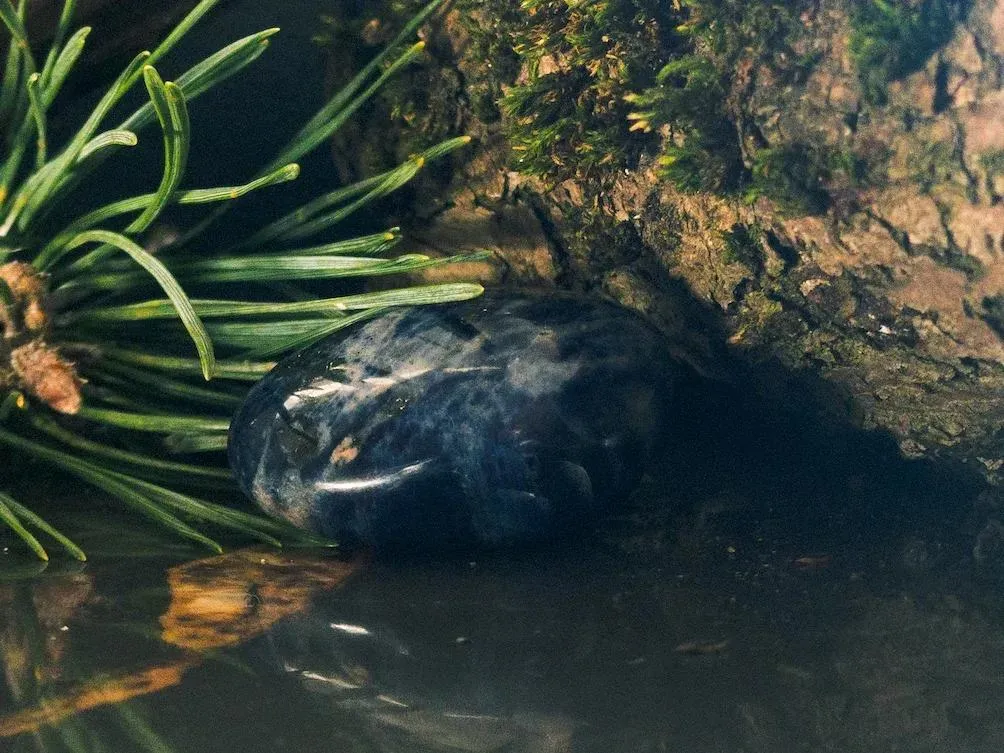
Sodalite: blue stone, white veins and surprising differences
A dark blue stone crossed by pale veins. Sodalite invites a closer look: dense blue in one spot, a white line cutting through another. But colour alone cannot tell its whole story.
- What is it?
- A distinct mineral species
- Composition
- Na₈Al₆Si₆O₂₄Cl₂
- Hardness
- 5.5–6 on the Mohs scale
- Crystal system
- Cubic
What do blue and white reveal?
GIA describes sodalite as usually semitransparent to opaque, violetish blue material with white calcite veins. That combination resembles lapis lazuli. Yet sodalite is not always blue: the mineral handbook also lists colourless, white, yellowish and greenish examples.
Even transparent sodalite is more than a theoretical possibility. In 2021, a GIA laboratory described a near-colourless, transparent 7.17-carat stone. An unusual example, quite unlike the blue polished pebbles many of us recognise.
Sodalite and lapis: a resemblance with a difference
Both can look blue and white, but these names describe different things in mineralogy.
Swipe the table sideways to see every column.
| Feature | Sodalite | Lapis lazuli |
|---|---|---|
| What is it? | A mineral species with a defined chemical composition. | A rock containing several minerals. |
| Pale areas | White calcite veins are common. | Can also contain calcite. |
| Golden glints | A similar colour does not establish identity. | Pyrite can produce characteristic golden flecks. |
From rocks to a royal interior
The University of Waterloo Earth Sciences Museum associates sodalite with nepheline syenites, phonolites and other geological settings. Its name refers to its sodium content. Distinct crystals are rare; grains and massive material are more common.
The museum also tells the story of sodalite near Bancroft, Canada. Following the Princess of Wales's interest at the 1901 world fair, 130 tons of material were shipped to England in 1906 to decorate Marlborough House. This is one deposit's history, not the origin of every sodalite stone.
What is hackmanite?
Samples from Myanmar and Afghanistan examined in GIA research differed in their optical behaviour. The same effect cannot be assumed for every sodalite. The Nimbas catalogue photograph does not establish that the offered stone is hackmanite.
Looking after a polished stone
Sodalite is used for beads, cabochons and carvings. Its hardness describes resistance to scratching, not resistance to a fall.
- Clean gently. The International Gem Society recommends warm water, mild detergent and a soft brush.
- Store separately. A soft pouch protects against rubbing against harder stones, such as quartz.
- Avoid heat and strong chemicals. When the treatment history is unknown, avoid steam and ultrasonic cleaning.
IGS notes that white sodalite material can be dyed blue. This is general information about a possible treatment, not a claim about an individual Nimbas stone.
Take a closer look at Nimbas sodalite. Where does a white vein stop? Where does the blue deepen? A small stone leaves plenty to notice.
Sources and further reading
- Handbook of Mineralogy – sodalite composition and properties
- University of Waterloo museum – sodalite and Bancroft history
- GIA – laboratory study of transparent sodalite
- GIA – lapis lazuli composition
- GIA – research on hackmanite and sodalite optical properties
- International Gem Society – sodalite uses and care
- GIA – caring for jewellery


